Storm Damage Restoration Services in New York – 24/7 Emergency Response and Full Recovery
24/7 Emergency Storm Cleanup, Damage Repair & Property Restoration in New York
A nor’easter can drop a ceiling in Park Slope while flash flooding fills a Queens basement in under an hour. In New York, the first 24 to 48 hours decide whether a storm loss stays a drying job or becomes a mold, structural and insurance dispute.
Perfect Restoration delivers storm damage restoration services in New York with 24/7 emergency dispatch across Manhattan, Brooklyn, Queens, the Bronx, Staten Island, Long Island and Westchester. Our IICRC-certified, OSHA-trained technicians handle water extraction, debris cleanup, roof tarping, board-up, structural drying and full reconstruction, and we document every step in Xactimate so your claim moves faster.
Whether you manage a pre-war co-op, a Long Island home or a commercial high-rise, one call to [Phone] starts the recovery.
Comprehensive Storm Damage Restoration Services in New York
Storm recovery runs in three phases: assessment, mitigation, then restoration. Skipping or delaying any phase is what turns a one-week repair into a six-week one.
- Assessment (hours 0–6): A project manager shuts off or isolates hazards, photographs every affected room, and uses moisture mapping and thermal imaging to find water that has traveled behind walls, under flooring and into ceiling cavities.
- Mitigation (hours 6–72): Crews extract standing water, tarp the roof, board up broken openings, and start structural dehumidification and HEPA air scrubbing. This phase follows the IICRC S500 water damage standard.
- Restoration (days 3 onward): Technicians remove unsalvageable materials, verify drying with documented readings, then rebuild drywall, insulation, flooring and finishes. If mold is found, the work shifts to the IICRC S520 mold standard.
New York’s storm profile shapes each phase. Nor’easters bring wind-driven rain and heavy snow loads that stress older roofs. Coastal storm surge and flash flooding hit low-lying areas of Brooklyn, Queens, Staten Island and Long Island’s South Shore. Tropical storms can do both in one night, and winter ice dams force meltwater under shingles in Westchester and the outer boroughs.
Whatever the borough, the call that matters is the first one. If you are searching for storm damage restoration near me from a flooded basement in the Bronx or a leaking penthouse in Manhattan, the same sequence applies.
The First 48 Hours After a Storm: Mitigation Timeline
| Window | What happens | Why it matters |
|---|---|---|
| 0–2 hours | Emergency dispatch, safety triage, power and gas isolation, photo and video documentation | Electrical shock and structural hazards come first; photos support your claim |
| 2–6 hours | Emergency roof tarping, board-up services, stopping active water entry | Prevents wind-driven rain from damaging more of the building |
| 6–24 hours | Water extraction, moisture mapping, thermal imaging, containment of Category 3 areas | Removes the bulk of the water before it wicks into drywall and framing |
| 24–48 hours | Structural drying, dehumidification, HEPA air scrubbing, antimicrobial treatment, daily drying logs | EPA guidance targets drying within this window to avoid mold growth |
| 48+ hours | Drying verification, Xactimate scope and estimate, S520 mold protocol if growth is present, reconstruction plan | Clean water left sitting can degrade to Category 2 within about 48 hours |
Emergency Storm Damage Debris Cleanup in New York
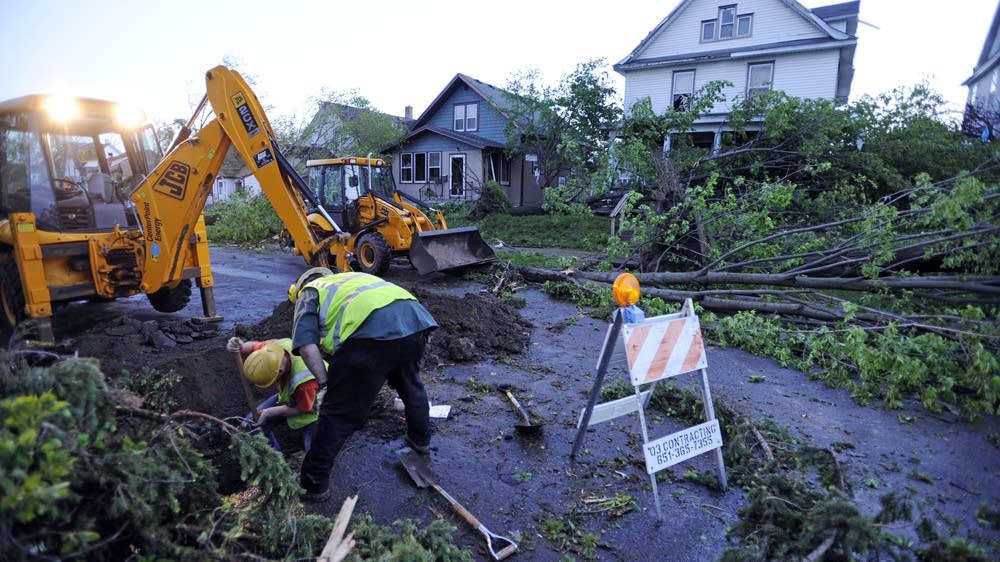
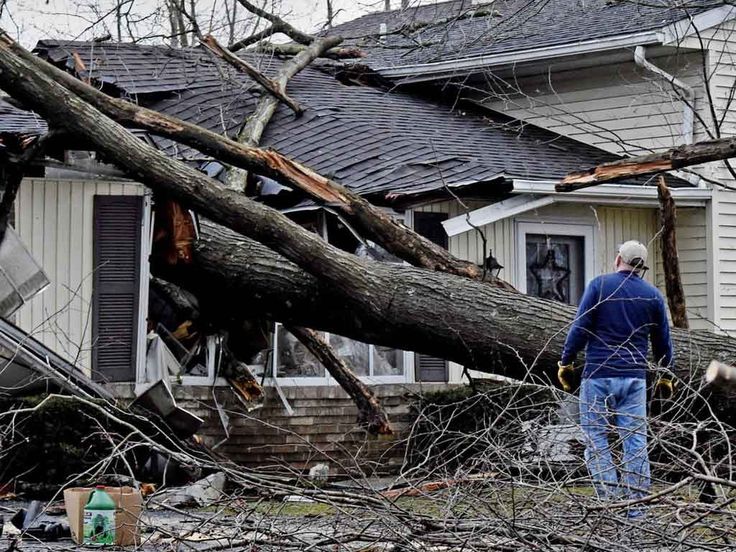
Storm damage debris cleanup in New York starts with safety, not speed. Downed lines, unstable limbs and contaminated water have to be controlled before anything is hauled away.
- Fallen trees and limbs: Crews cut and remove trees from roofs, driveways and yards. Trees touching utility lines are left for the utility to de-energize first, and trees on public sidewalks or streets are reported to 311.
- Shattered glass and broken sashes: Glass is vacuumed with HEPA equipment, not swept, so fine shards do not spread into HVAC systems and carpets. Openings are boarded the same visit.
- Category 3 black water: Floodwater, sewer backup and storm surge are classed as Category 3 under IICRC S500. Technicians wear full PPE, contain the area, remove porous materials such as carpet, pad and wet drywall, and disinfect hard surfaces.
- Hazardous debris: Wet insulation, treated lumber, fuel, batteries and chemical containers are separated from ordinary waste and sent to approved facilities.
Disposal follows New York State and NYC sanitation and environmental rules, and contaminated material is not mixed into regular curbside collection. Your restoration contractor should give you disposal documentation for the claim file.
Older NYC buildings need extra controls
Pre-war and mid-century buildings often contain lead paint and asbestos-containing materials in plaster, pipe insulation, floor tile and joint compound. Storm demolition can disturb them.
- Lead: The EPA’s Renovation, Repair and Painting rule applies to work in housing built before 1978.
- Asbestos: Suspect materials are tested before they are disturbed, and positive results trigger NYC and New York State abatement rules.
- Worker safety: OSHA requirements govern respiratory protection, fall protection and confined-space entry in flooded cellars.
These steps add hours, not weeks, when the crew plans for them on day one.
Structural Storm Damage Repair in New York
Storm damage repair in New York has to beat a clock: the EPA’s guidance is to dry water-damaged materials within 24 to 48 hours to avoid mold, though growth is not guaranteed after that point. Repairs sequence around that window.
- Roof leaks: Emergency roof tarping stops intrusion first. Permanent repair follows once the deck is dry and any ice dam, wind-lifted flashing or snow-load damage is assessed.
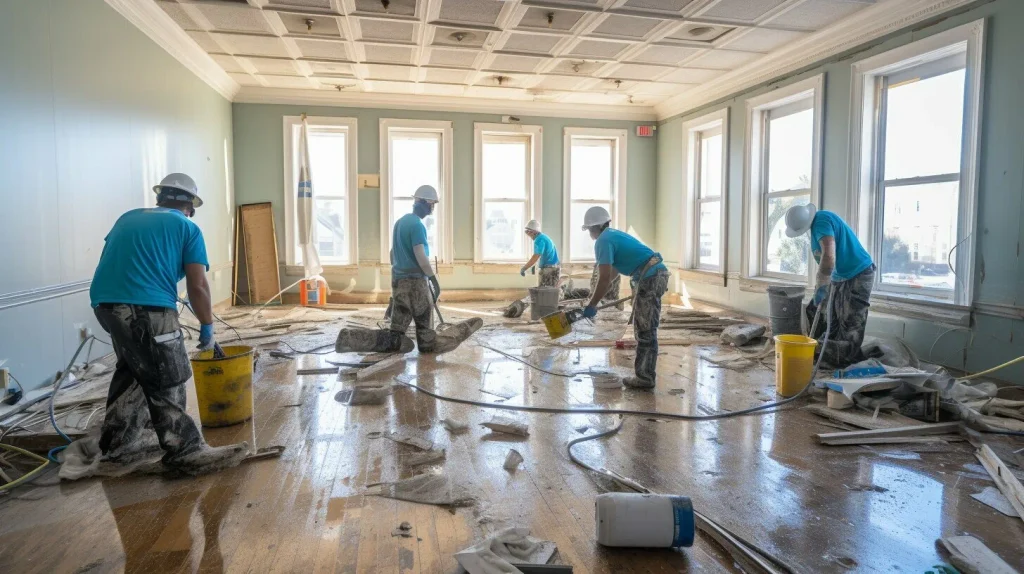
- Structural drying: Injectors, air movers and desiccant or refrigerant dehumidifiers dry wall cavities, subfloors and joists. Technicians record daily moisture readings until materials reach the drying goal.
- Drywall and insulation replacement: Saturated drywall and wet insulation are cut out, typically above the visible wicking line, then replaced only after framing tests dry.
- Secondary mold prevention: Antimicrobial application, HEPA air scrubbing and containment limit spores. If growth is confirmed, work moves to IICRC S520 protocols.
NYC permits, landmarks and boards
- DOB emergency work: Under the NYC Administrative Code, licensed contractors may perform emergency work before a permit is issued if an Emergency Work Notification is filed within two business days after completion, per the Department of Buildings. Which trades may file is limited, so confirm your contractor’s license type.
- Landmark and historic buildings: Most exterior work needs a Landmarks Preservation Commission permit, but the LPC publishes a list of emergency repairs that do not. For anything else, LPC staff can be reached at 212-669-7817.
- Co-op and condo boards: Most buildings require notice to the managing agent, a certificate of insurance, an alteration agreement and freight elevator scheduling before crews enter. We start that paperwork on dispatch so access is not the bottleneck.
- Fee relief after major storms: After Hurricane Sandy and the remnants of Hurricane Ida, the City waived some DOB filing and permit fees by executive order, so ask whether a waiver applies to your event.
Commercial Storm Damage Restoration in NYC
Commercial storm damage restoration in NYC is measured in downtime, not just square footage. Every day a store, office or warehouse is closed costs revenue the building’s repair bill never shows.
| Property type | Typical storm exposure | Restoration focus |
|---|---|---|
| High-rise office or residential | Wind-driven rain through curtain wall and roof; water traveling down multiple floors | Floor-by-floor moisture mapping, ceiling and elevator-shaft drying, tenant-by-tenant scheduling |
| Retail and restaurants | Roof leaks, storefront glass failure, street-level flooding | Fast board-up, inventory protection, health-code-compliant cleaning before reopening |
| Warehouse and industrial | Flat-roof ponding, loading-dock flooding, wet stock | Large-scale extraction, pallet and stock pack-out, dehumidification of open volumes |
| Basements, cellars and mechanical rooms | Storm surge and sewer backup reaching electrical and HVAC equipment | Category 3 protocols, equipment drying, coordination with licensed electricians |
How we keep NYC businesses open
- SLA response times: Commercial accounts get priority dispatch under a written service level agreement, with phone response in 1-2 hrs minutes and on-site assessment in 1-3 hrs hours.
- Phased work: We dry and repair in zones so unaffected floors, suites and sales areas stay operational.
- After-hours crews: Noisy or disruptive work moves to nights and weekends where building rules allow.
- Property-manager coordination: We handle certificates of insurance, freight elevator reservations, building rules and communication with the managing agent and tenants.
- Business interruption documentation: We log labor, equipment and downtime in the formats carriers expect, which supports business interruption and extra expense claims.
If your building has a pre-loss relationship with a restoration vendor, requests for a standing emergency agreement are welcome before storm season.
Navigating New York Storm Insurance Claims
A well-documented claim gets paid faster, and the documentation starts before the first fan is plugged in. Insurers in New York work under Insurance Law § 2601 and Regulation 64, which set claim-handling deadlines counted in business days, generally 15 to acknowledge a claim and begin the investigation.
Document the loss
- Photograph and video everything before cleanup: every room, ceiling stain, waterline, damaged belonging and the exterior.
- Keep damaged items until the adjuster has seen them, unless they are unsafe or Category 3 contaminated. Photograph those before disposal.
- Report the claim promptly and record the claim number, date and the name of everyone you speak with.
- Take reasonable steps to prevent further damage, such as tarping and water extraction. Keep every receipt; mitigation costs are usually part of the claim.
- Ask your contractor for drying logs, moisture maps and daily reports. These show the insurer exactly what was wet and for how long.
Wind damage versus flood damage
This distinction decides many claims. Standard homeowners and commercial property policies typically cover wind and wind-driven rain damage, but exclude flood. Flood coverage usually comes from a separate National Flood Insurance Program or private flood policy. When one storm causes both, the adjuster has to allocate damage between causes, so precise documentation of where water entered (roof, window or rising water) matters. Read your policy’s deductibles too: some coastal policies carry separate, higher wind or hurricane deductibles.
Working with the adjuster and Xactimate
- Be present for the inspection and walk the adjuster through every affected area, including hidden moisture found with thermal imaging.
- Use a line-item estimate. Most carriers price claims in Xactimate, an estimating platform with regional unit costs. When your contractor writes the scope in Xactimate, the two estimates can be compared line by line.
- Resolve gaps early. Missing line items, such as dehumidifier days, containment or code-required work, are the most common reason estimates differ.
- Know your options. A licensed public adjuster can represent you, and many policies include an appraisal process for disputes over the amount of loss.
We provide detailed Xactimate estimates and documentation to your carrier or adjuster, but we do not replace legal or public adjuster advice on coverage.
Frequently Asked Questions (FAQ)
How fast can a restoration crew reach me in NYC traffic?
Arrival time depends on borough, time of day and whether bridges and tunnels are open. During a citywide storm, crews triage life-safety and active water intrusion first. Perfect Restoration dispatches 24/7 and gives you a realistic arrival window on the first call, typically within 1 hours for standard residential calls.
How quickly does mold grow after a storm?
Mold can begin growing on wet porous materials within 24 to 48 hours, according to EPA guidance, which also notes that growth will not always occur after 48 hours. Drywall, insulation and carpet are the most vulnerable, and growth can be hidden inside wall cavities.
Does insurance cover wind damage or flood damage?
Standard property policies generally cover wind and wind-driven rain damage but exclude flood, which needs a separate flood policy. Your policy language and deductibles control, so ask your carrier or broker which applies to your loss.
Do I need a DOB permit for emergency storm repairs in NYC?
Not always before work begins. NYC allows licensed contractors to start emergency work before a permit is issued, provided the required Emergency Work Notification is filed within two business days after completion. Landmarked buildings and co-ops have additional approval steps.
Is it safe to clean up storm water myself?
Only for small, clean-water spills. Floodwater, storm surge and sewer backup are Category 3 black water under IICRC S500 and can carry bacteria and chemical contamination. Do not enter flooded areas with live electrical equipment, and call a certified crew for anything beyond a minor leak.
Get 24/7 Emergency Storm Damage Restoration in New York
Storm damage gets more expensive every hour it sits. Do these three things now:
Contact US Perfect Restoration for 24/7 emergency dispatch anywhere in Manhattan, Brooklyn, Queens, the Bronx, Staten Island, Long Island or Westchester.
Stay safe and document: shut off power to wet areas if you can do so safely, then photograph the damage.
Notify your carrier and your building manager or board, and tell us so we can coordinate access and paperwork.